Brunetto Latini
Brunetto Latini, a Florentine scholar, statesman, and author of the encyclopedic Tesoro, is one of the most significant figures Dante encounters in the Seventh Circle of Hell. Their meeting in Canto XV of the Inferno is charged with profound personal emotion, as Dante treats his former teacher with a reverence unmatched by any other encounter among the damned, while Latini delivers a crucial prophecy about Dante's future exile from Florence. The scene crystallizes the poem's tension between intellectual admiration and the immutable justice of divine punishment.
Identity and Background
Brunetto Latini was a Florentine notary, philosopher, and writer who lived from about 1220 to 1294. He served as a prominent statesman and was a key figure in the cultural life of thirteenth-century Florence. His most famous work, the Tesoro (or Treasure), an encyclopedic compendium of knowledge written in French during his exile in France, was widely read and influential. Dante explicitly acknowledges Latini as his master, crediting him with teaching him "how a man becomes eternal" — a phrase that suggests Latini's instruction in the pursuit of lasting fame through virtuous and intellectual achievement. This debt of gratitude makes the setting of their reunion all the more devastating: Latini is condemned to the Seventh Circle, specifically the round reserved for those who committed violence against nature, a category that in Dante's scheme includes sodomy.
Life and Plot Trajectory
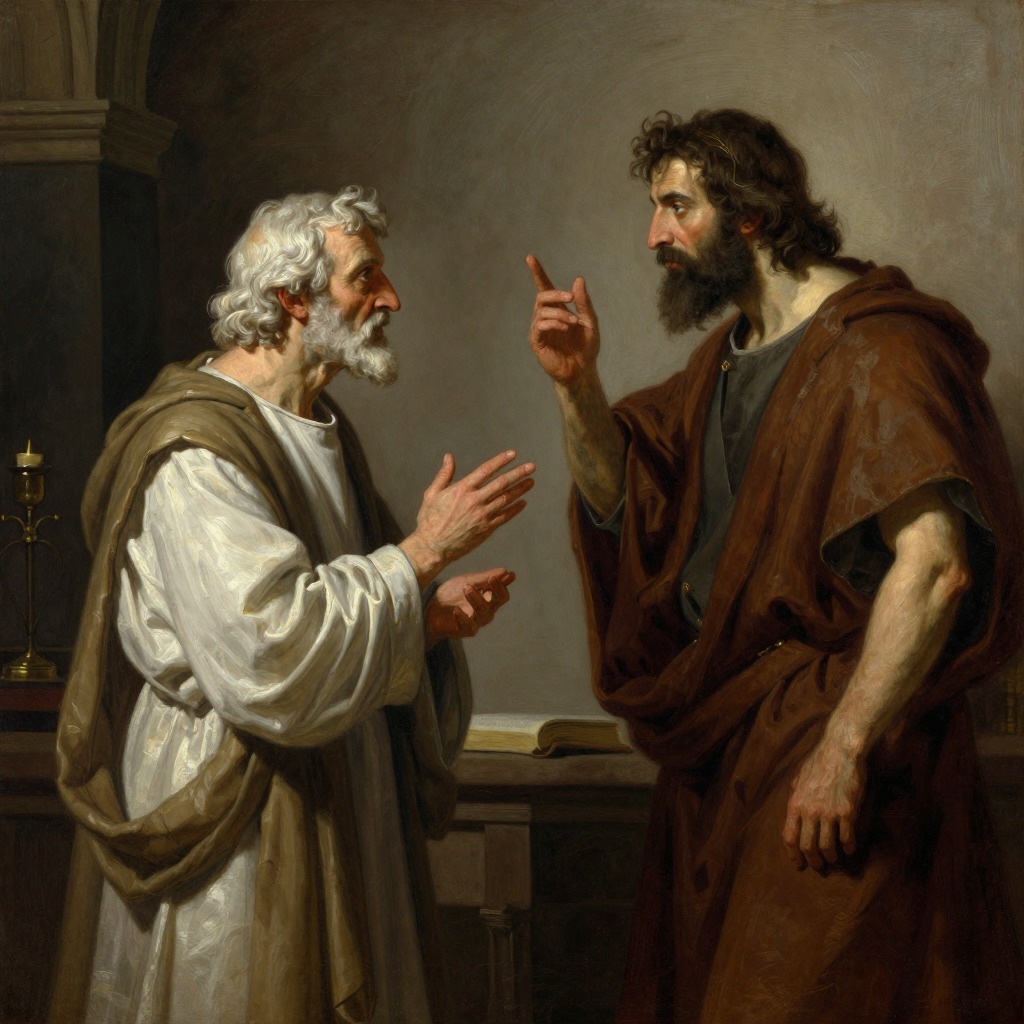
Dante and Virgil encounter Latini as they walk along the raised stone embankment that protects them from the burning sand and the flakes of fire that rain down upon the damned. The souls in this circle move constantly, and when Latini recognizes Dante, he seizes the hem of Dante's garment and cries out in astonishment. Dante, in turn, addresses him with the formal "Ser Brunetto," a title of respect. Because stopping would mean lying prostrate for a hundred years under the fire, Latini cannot pause; instead, he walks alongside Dante, who keeps his head bowed in a gesture of reverence. Latini explains that he was among those who, in life, were "tainted with the selfsame sin" — the sin of sodomy — and he names other notable figures suffering the same punishment, including the grammarian Priscian, the jurist Francis of Accorso, and a bishop transferred from the Arno to the Bacchiglione. Before departing, Latini commends his Tesoro to Dante's care, saying, "In which I still live, and no more I ask."
Key Actions and Objectives
Latini's primary action in this episode is to deliver a prophecy that shapes Dante's understanding of his own future. He tells Dante that if he follows his star, he cannot fail to reach a glorious port, and that the Florentines — whom he describes as an "ungrateful and malignant people" descended from Fiesole, "avaricious, envious, proud" — will become his enemies because of his good deeds. He warns Dante to cleanse himself of their customs. The prophecy foretells that both political factions in Florence will hunger for Dante, but that he will remain beyond their reach: "far from the goat shall be the grass." This prediction, which Dante later confirms through other encounters, is the first explicit foreshadowing of his exile. Latini also urges Dante to let the "beasts of Fiesole" make litter of themselves and not touch the plant that may yet revive the sacred seed of the Romans who remained in Florence.
Relationships and Conflict
The relationship between Dante and Latini is defined by a deep intellectual and emotional bond that transcends the horror of Latini's punishment. Dante's response to the prophecy is marked by filial piety: he tells Latini that his "dear and good paternal image" is fixed in his mind, and that he is grateful for the teaching that showed him how a man becomes eternal. He declares himself ready for whatever Fortune may bring, saying, "Let Fortune turn her wheel around as it may please her, and the churl his mattock." Virgil, observing this exchange, turns back and looks at Dante with approval, remarking, "He listeneth well who noteth it." The conflict is not between Dante and Latini but between Dante's love for his teacher and the grim reality of Latini's damnation — a tension that underscores the poem's insistence that even the most admirable human qualities cannot exempt a soul from divine justice.
Change and Ending
Latini's departure is swift and poignant. As he sees new smoke rising from the sand, he realizes that a company of souls is approaching with whom he may not be, and he must rejoin his own band. He turns and runs across the plain, and Dante compares him to the winner of the race for the Green Mantle at Verona — a runner who outpaces his competitors. The simile emphasizes Latini's speed and determination, but also his isolation: he is a figure of great ability and knowledge, now condemned to an eternal, futile race under a rain of fire. Dante never sees him again, but the prophecy he delivers echoes throughout the rest of the poem, informing Dante's understanding of his own exile and his role as a poet who must speak truth to power.
Narrative Role and Evaluation
Brunetto Latini serves as a crucial figure in Dante's moral and poetic education. He is one of the few damned souls whom Dante treats with unabashed reverence, and their encounter dramatizes the poem's central tension between human achievement and divine judgment. Latini's presence in Hell is not a condemnation of his learning or his literary work — indeed, Dante honors both — but a reminder that intellectual and civic virtue, however admirable, cannot substitute for the grace and repentance that lead to salvation. The episode also functions as a key moment in the poem's political prophecy, giving Dante his first clear vision of the suffering that awaits him in exile. Through Latini, Dante both pays homage to his intellectual heritage and begins to articulate the personal cost of his own poetic mission.